Historically, drug discovery breakthroughs have rarely been limited by human curiosity or computing power alone. They have been limited by the physical velocity of the human-run experiments that are an essential part of the process.
From 1950 to 2010, the number of new drugs approved per billion dollars of inflation-adjusted R&D cost fell about 80-fold, halving roughly every nine years, a pattern the industry calls Eroom’s Law. This trend has flattened since 2010, but the cost per approved asset remains at ~$2.7 billion, and returns on that spend are under ~3% (excluding the GLP-1 windfall).
Today, science remains limited by the number of experiments humans can run. While biological foundation models like AlphaFold 3, Evo 2, and ESM3 are making monumental leaps in predicting molecular structures, the physical act of synthesizing, purifying, and testing molecules remains stuck in an analog, manual bottleneck.
The cost of this painstakingly slow process is not abstract. Drug prices are far from sustainable, with a single approved drug costing billions to bring to market. Big pharma's R&D internal rate of return bottomed at 1.2% in 2022 and has clawed back to roughly 5.9% in 2024. While that’s an improvement, it’s still not a number that justifies the capital. Meanwhile, the world’s 12 largest pharma companies face roughly $400 billion in revenue exposure from loss of exclusivity between 2026 and 2032, while also struggling to accelerate drug discovery efforts.
Every one of these challenges is downstream of the same constraint: scientific experiments are too slow, manual, and expensive, so we cannot run enough of them.
Meet Warp Sciences
At SignalFire, our investment thesis in the scientific intelligence tech stack is grounded in our belief that value will not accrue solely from commoditizing foundation models, but from the closed-loop systems that unify software reasoning with physical execution and proprietary data generation.
That’s why we’re investing in Warp Sciences, a category-defining company building a US-based chemistry contract research organization. Warp starts where the pain is most acute, and the data is most valuable: preclinical drug discovery.
Warp emerged from stealth today with $215 million in funding from Lightspeed, NVIDIA, IVP, Mayfield, Lux, Menlo Ventures, and SignalFire, among others.
We've written before about biopharma's $140 billion outsourcing habit: roughly half of all pharma R&D spending now flows to external providers, and nearly 80% of U.S. biopharma companies rely on overseas Chinese CROs and CDMOs for critical workflows. For biopharma companies in the U.S., that means compounds crossing borders, timelines measured in months, pricing negotiated on a bespoke basis and billed by the hour, and intellectual property sitting in jurisdictions where its protection is an open question.
“AI has dramatically accelerated software engineering and mathematics, but has yet to make the same impact in the physical sciences. Chemistry and biology move forward when you make something, test it, and learn from the results. If we want to build more capable AI for science, we need to generate real-world data at scale. Warp is starting that process by making the research compounds that drug discovery needs today, while building the labs and automation to speed up the cycle from hypothesis to experiment to answer.”
- Kevin Weil, co-founder and CEO of Warp Sciences
Warp is building American capacity to discover new medicines faster and automating the process from the inside out.
Building the hands, nervous system, and brain of scientific discovery
1. Be the hands – an automated chemistry foundry: Warp can serve a biopharma customer's full chemistry needs with an initial focus on lead optimization analog synthesis, making molecules that scientists can test. Experienced chemists guide the science automation through robotic lab operations.
“I’ve worked with overseas chemistry partners that delivered speed and value, but I still worried about protecting the intellectual property behind our programs. We’re building Warp to give drug hunters that same caliber of chemistry services in the U.S., with IP protection at the center of the relationship, and without the price premium that U.S. boutique CROs currently demand.”
– Sol Reisberg, Co-Founder & CSO, Warp Sciences
2. Connect the nervous system – a self-improving experimental loop: From day one, Warp is being built for standardization, instrumentation, and machine-readable workflows. Every run unlocks the autonomy flywheel, making the lab faster and more reliable while also accelerating the scientific flywheel.
“Our goal is simple: every experiment should make the next one smarter,” said Mano Paluri, co-founder and CTO of Warp Sciences. “AI needs a closer connection to the physical work of chemistry. Closing the loop between designing experiments, executing them, and learning from their outcomes builds increasingly capable systems for deciding what to make and how to make it. We’re building the software, AI and robotics alongside the lab so each part is shaped by what chemists actually need.”
– Mano Paluri, Co-founder & CTO, Warp Sciences
3. Become the brain – AI that designs experiments and directs discovery: Warp’s AI helps plan experiments and learn from results. The endgame is to drive the marginal cost and latency of a physical experiment toward those of a computation. A typical drug program synthesizes and tests 10,000 molecules over 4-5 years. An AI that steers the program toward the right 1,000 molecules fundamentally transforms the economics by an order of magnitude.
Why we think Warp will win the scientific intelligence era
Warp exemplifies every core pillar of our investment thesis in the scientific intelligence tech stack. By combining a U.S.-sovereign physical foundry with a hyperscale experimental data engine, Warp is uniquely positioned to train the first models that are genuinely superhuman at reasoning about physical matter.
We couldn't be more excited to partner with Kevin Weil, Sol Reisberg, DJ Patil, Mano Paluri, and the entire Warp Sciences team as they re-shore critical scientific infrastructure, accelerate therapeutic discovery, and build the future of autonomous physical science.
A rare founding team that’s as strong in chemistry as in AI
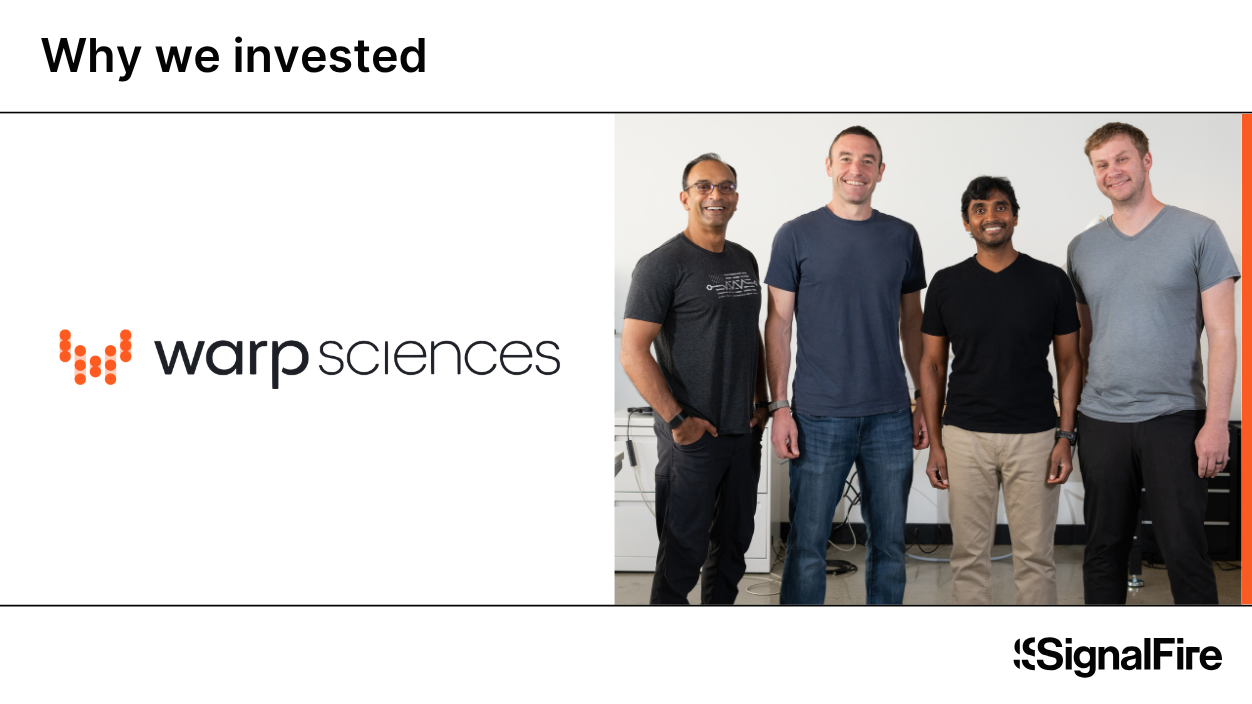
Warp’s founding team has world-class expertise across science, robotics, and AI. The scope of the challenge Warp is pursuing reflects tremendous complexity across these domains, and it is also exactly why we believe in this founding team.
- Kevin Weil (CEO) is a physics PhD dropout who has scaled Twitter, Planet, and OpenAI, and led products used by billions at Instagram and ChatGPT. He was most recently the Chief Product Officer and VP of Science at OpenAI.
- Sol Reisberg (CSO) is a PhD synthetic chemist with two decades of experience leading medicinal chemistry and advancing five drugs into the clinic, from Gilead to Schrödinger, and co-founding Terremoto Biosciences. As someone who has sat in customers' shoes working on AI in drug discovery, he deeply understands their frustrations and is ready to transform the experience himself.
- DJ Patil (COO) is a PhD mathematician who helped build LinkedIn, RelateIQ, and Devoted Health, co-coined the term "data scientist," and served as the first Chief Data Scientist of the United States. I personally had the privilege of working alongside DJ at Devoted Health almost a decade ago. It’s a true honor to partner with him on his next adventure after co-investing together most recently as Devoted alumni.
- Mano Paluri (CTO) is a computer science PhD dropout who helped found Facebook AI Research, spent a decade building AI at Meta, including the Llama family of models, and most recently led multimodal understanding and generation as VP at Meta Superintelligence Labs.
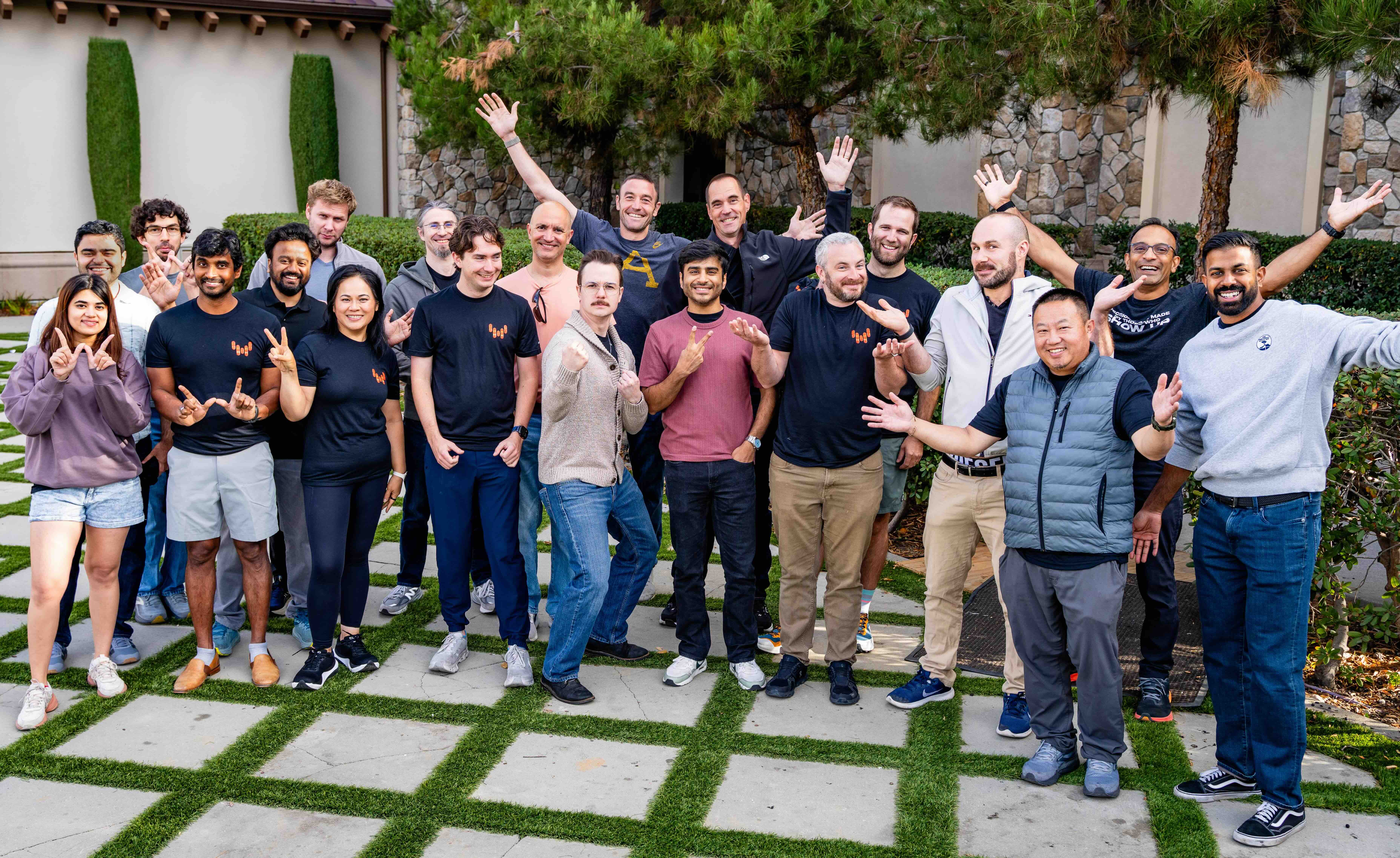
This is a rare and uniquely qualified team where the chemistry is as credentialed as the AI, and they bring hard-earned lessons from scaling multiple companies through IPOs. Joining them are robotics talent from Genesis, Skild AI, and 1X, plus scientists from Genentech and Lawrence Livermore.
A defining moment for U.S. drug discovery
This company would have been impossible to build three years ago. Since then, three things have changed simultaneously to make this a reality:
- Frontier models can finally reason about chemistry and biology well enough to be useful collaborators, and the remainder is a data gap that is solvable rather than a research mystery.
- Robotics has gotten dexterous enough for real lab work, and lab hardware is increasingly modular and machine-controllable. Liquid handling has been solved for a while, but a lot of the other lab work has only been automated recently.
- The policy and procurement environment has flipped. The BIOSECURE Act signed in December 2025 took direct aim at the nearly 80% of U.S. outsourcing currently handled by overseas providers. Whatever its final form, it has already made "Where is your chemistry done?" a board-level question at biotechs and is catalyzing what could be the largest onshoring wave in biopharma history. That wave will be messy with fragmented suppliers, capacity bottlenecks, and inspection backlogs, but that’s often where new entrants can find the best opportunities to win.
The market below is already large and continues to grow rapidly. The CRO slice of the $140 billion in outsourced biopharma work alone is projected to nearly double from $70 billion in 2025 to $126 billion by 2034. Analysts estimate that AI could unlock more than $350 billion in value across the biopharma sector. Because budgets are being cut and hiring curves are flat, outsourced service lines are genuinely ripe for disruption for the first time in decades. CRO/CDMO moats were built on bundling dozens of line items into a single RFP, priced at cost, plus a 10-20% markup. Even if a startup offered a better solution, it was nearly impossible to disrupt existing CRO contracts until now. Pharma is finally starting to unbundle the cost-plus RFP it has tolerated for decades in exchange for 10x efficiency gains.
Autonomy is the only way to absorb the volume, and why it’s possible to transform a historical labor-arbitrage business into a high-margin, high-volume one with unprecedented operating leverage.
"Warp's services bolster customer-led discovery programs. Our biotech and pharma customers determine which molecules to pursue and retain control of their drug programs,” said DJ Patil, co-founder and COO of Warp Sciences. “We’re not developing drugs of our own. We’re building the infrastructure for the people who do."
- DJ Patil, Co-Founder & COO
Warp fits the pattern we look for in category-defining AI companies:
- A hair-on-fire problem. Speed, cost, and IP security in preclinical chemistry are major pain points for every drug developer.
- Going deep, not broad. Warp is vertically integrated on purpose, owning the physical layer that produces the data moat. You cannot buy or scrape this dataset.
- A wedge that funds the global scientific mission. The CRO business is a multi-billion-dollar industry in its own right, but Warp is building critical infrastructure and capacity for discovering new medicines faster in America.
To prepare for a global population that will live significantly longer, the world needs more medicines for more diseases and conditions. This requires millions of molecules to be made and tested. To meet these demands, Warp is building toward a different future where AI-powered labs design, run, and learn from experiments 24/7, generating data at scale. We’re inspired by Warp’s mission to accelerate scientific discovery and honored to partner with them on this journey.
Warp Sciences is hiring across chemistry, robotics, and AI research. If you want to work on improving the rate of scientific discovery, explore open roles here: https://warp.xyz/careers.
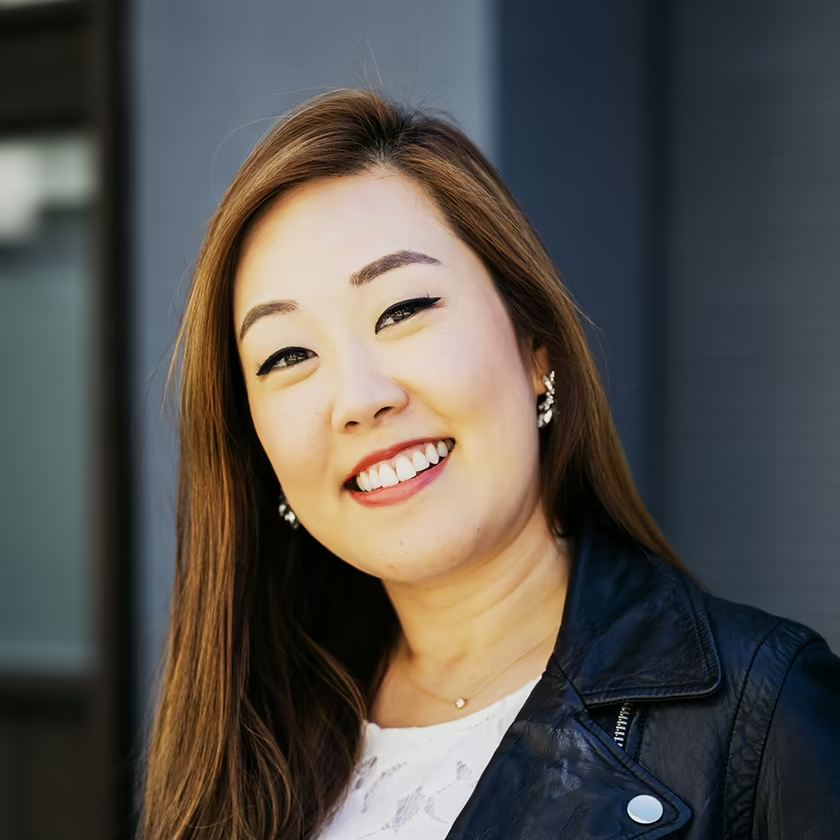
Sooah Cho
Partner
Sooah is a Partner leading the early-stage investment practice in Health and PharmaTech. Prior to SignalFire, she was a product leader at CVS Health and Devoted Health, and led fast-growing B2B software investments at Underscore VC.