Musculoskeletal (MSK) disorders now cost the U.S. healthcare system more than $400 billion a year, and continue to increase. More than half of American adults live with an MSK condition, and yet the clinicians on the front line are managing all of it with archaic tools built decades ago.
In a typical 15-minute visit, a physician must parse years of imaging, physical therapy notes, lab test results, and free-form text entries, while also documenting a care plan that meets payor requirements. The data is fragmented, workflows are manual, and the cost of getting it wrong compounds across a system that's already stretched thin.
Physicians spend nearly 75% of their time on tasks unrelated to patient care, and the system is rife with unnecessary interventions, missed billing windows, and patients being routed to the wrong specialists.
After leading Flagler Health’s Series A round last year, we’re thrilled to double down on Flagler’s $50 million Series B round alongside Bessemer Venture Partners as they set out to transform the MSK market.
Exceptional founder market fit
When we first met the founders of Flagler, we were impressed by the team’s unique blend of clinical expertise, deep empathy for their target customers (as former MSK clinic operators), technical AI chops, and speed of execution.
Flagler’s CEO, Albert Katz, spent years scaling multi-disciplinary spine and orthopedic practices and running P&Ls at a national MSK network. As someone who has lived and breathed the challenges he’s tackling, he understands the customer’s pain and dysfunction within MSK clinics on a deeply personal level. His co-founder, Dr. Leon Anijar, is a board-certified interventional pain physician who knew exactly where clinical workflows break down. And their technical co-founder, Will Hu, had prior AI/ML experience modeling disease detection and progression. We knew this team was uniquely positioned to leverage the latest AI breakthroughs to fix MSK clinics at the root, not just patch around it.
"MSK is where the healthcare system's dysfunction is most visible. With shrinking reimbursements, administrative overload, and inefficient triage, I watched it destroy clinician morale and clinic margins. This is a structural problem. The cost of running these clinics keeps climbing and is a major reason American healthcare is so expensive. We're the only platform built to fix it at the root.”
- Albert Katz, CEO, Flagler Health
Win-win-win for patients, providers, and payors
Flagler’s specialty-specific intelligence layer is trained on one of the largest MSK patient datasets in existence, and sits natively within a practice's existing EMR. This means Flagler can seamlessly unlock AI’s potential without additional logins, browser tabs, or training for existing staff. Flagler’s operating system ingests a practice's EMR feed in real time, learns each physician's individual decision-making patterns alongside evidence-based clinical guidelines, and risk-stratifies patients based on their clinical needs. In addition to triaging each patient's risk, Flagler orchestrates the full patient lifecycle, from initial intake through triage, prior authorization, billing, and patient communications.
"Flagler tracks patients remotely to make sure they adhere to their post-op care and medication plans with zero workflow change. So no new logins, no training, and no extra clicks. Just a fully hands-free, turnkey solution that runs in the background."
- Dr. Christopher Netzel, Coastal Health
Because it's built to understand reimbursement structures, Flagler instantly surfaces relevant, billable, clinically appropriate actions. It's a rare case where better medicine and better economics point in the same direction, resulting in a win-win-win for all stakeholders.
Most importantly, 87% of patients reported improvement in pain, mood, sleep, or mobility. Flagler also generates up to $164,000 in average additional annual revenue per provider, while enabling payors to save tens of thousands of dollars per patient through Flagler’s MSK risk triage engine, which routes patients away from unnecessary surgeries to the right treatment at the right time. That alignment is a big part of why Flagler has earned deep customer love and unlocked unusually fast implementation in a market that typically moves very slowly.
Flagler’s scale of adoption and compounding data moat
In under three years, Flagler has scaled from its initial MSK risk-triage engine to a full-stack, AI-native platform that powers thousands of providers in more than 36 states across the U.S. In addition to being the most advanced MSK risk-triage engine on the market, Flagler has established a compounding data moat built on 220 million patient records. Every patient Flagler's platform helps makes the system smarter, and it becomes harder for others to replicate their moat.
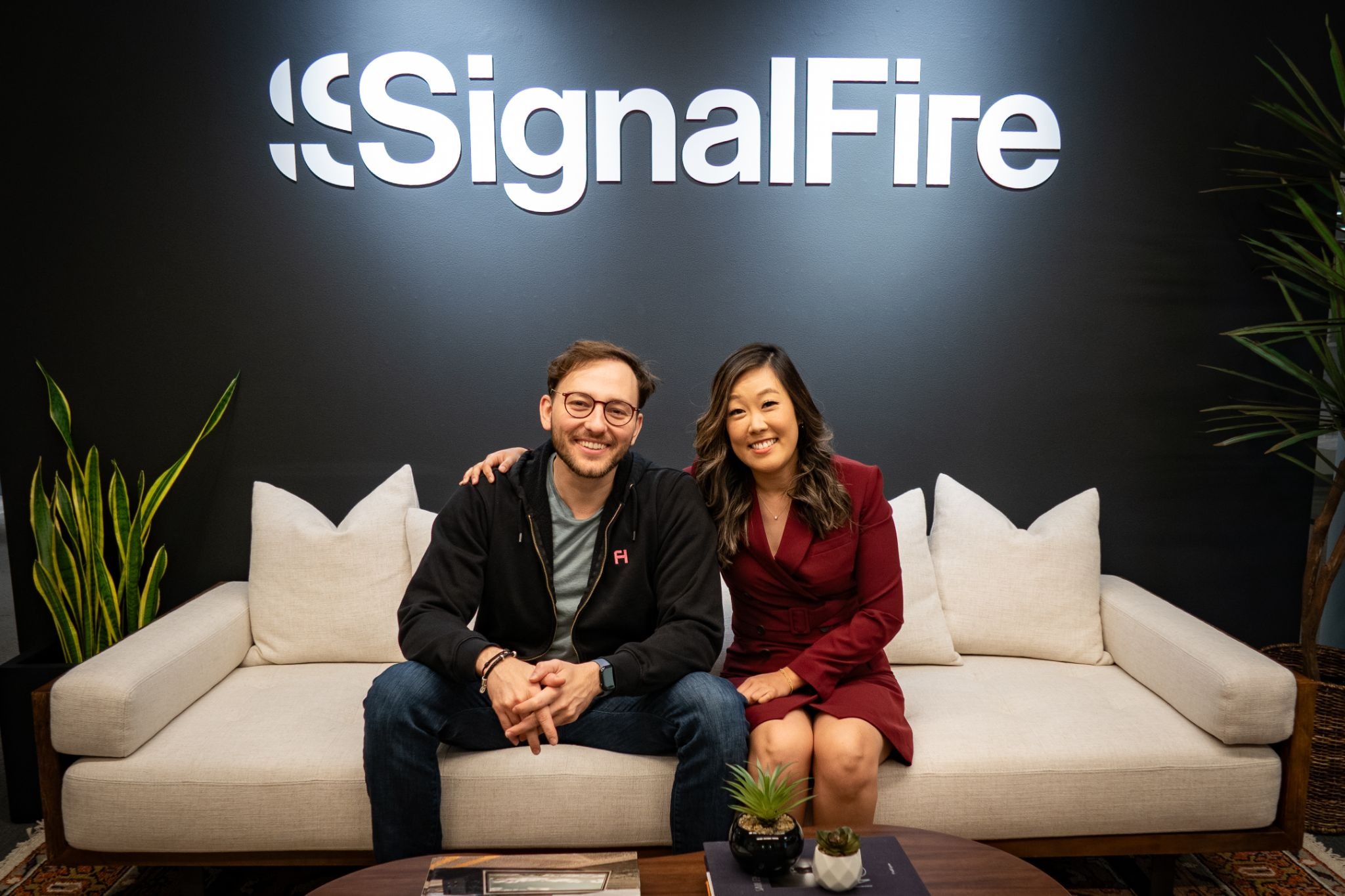
(From left to right: Albert Katz, CEO of Flagler Health, and Sooah Cho, AI in Health & PharmaTech Partner, SignalFire)
Why we’re doubling down on Flagler
At SignalFire, we look for founders uniquely qualified to tackle massive, structurally broken, underinvested markets like MSK, which represents one of the highest healthcare spend categories for both employers and payors.
We're proud to have partnered with Albert, Leon, and Will since the early days of their journey, and excited to deepen our partnership given the undeniable traction and incredible execution to date. Flagler’s solutions continue to be deployed across a wide range of MSK practice types and EMR environments nationwide.
Building on the strong momentum, Flagler Health is scaling its team and hiring across many roles with its new funding. If you’re interested in joining their team, you can check out open positions here. If you’d like to learn more about Flagler Health’s AI-native operating system for your MSK clinic, reach out here.

Sooah Cho
Partner
Sooah is a Partner leading the early-stage investment practice in Health and PharmaTech. Prior to SignalFire, she was a product leader at CVS Health and Devoted Health, and led fast-growing B2B software investments at Underscore VC.